


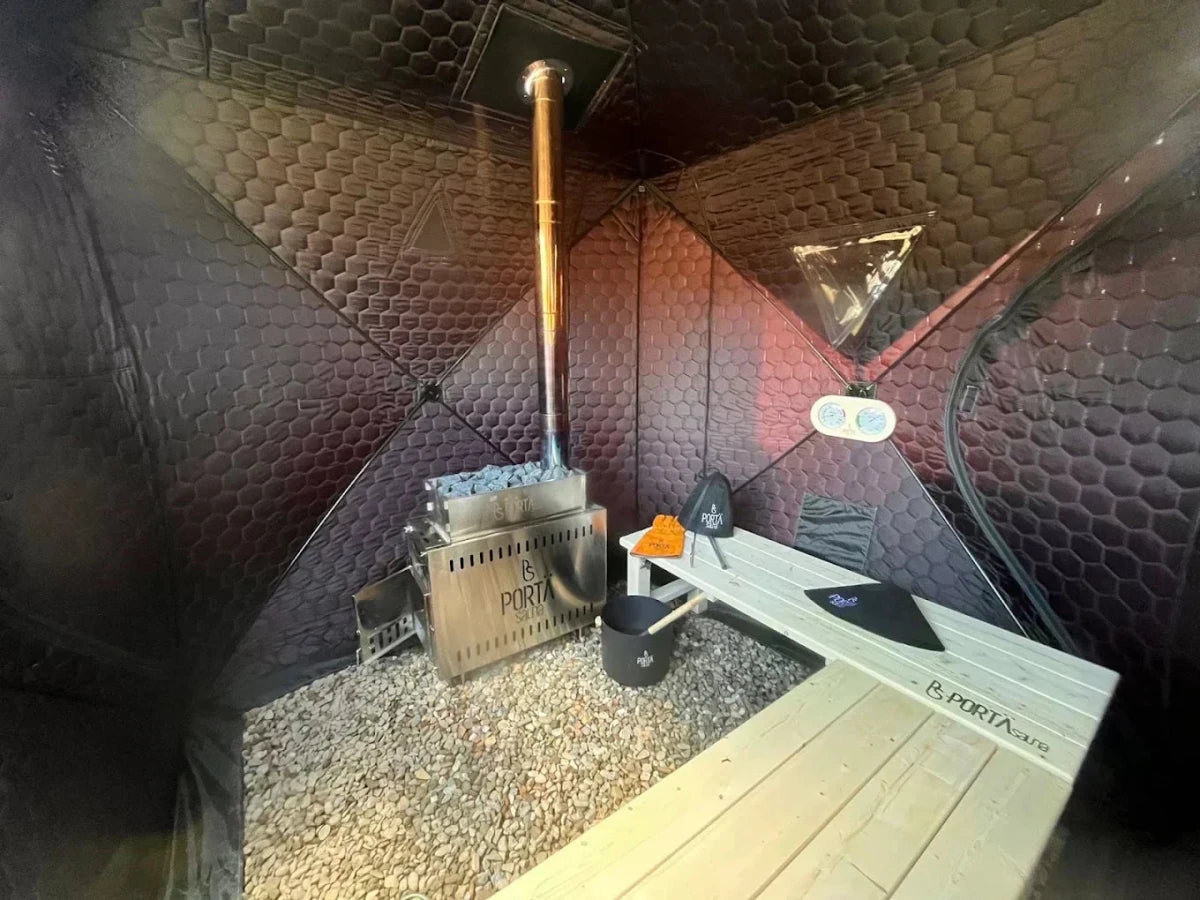
Sauna seating covers every place you sit, stretch, cool down, or share a calming session, from built-in timber benches in garden cabins to folding benches, modular outdoor seating, and portable tent sauna furniture.
For UK homes, the right pick depends on three major things: how much space you've got, what kind of sauna you own, and how many people usually use it. A compact garden in a different area won’t need the same bench layout as a six-person timber cabin at a countryside retreat. And with the UK’s sauna culture growing fast, more people are looking for seating that feels authentic without demanding a permanent build.
There's no universal "best" layout. There's only the layout that fits your room and your headcount. Here are the most useful sauna seating ideas for 2026.
I-Shape (Straight) Bench Layout

The I-shape bench is the cleanest, simplest sauna seating layout: one straight bench running along a single wall.
It’s best for small saunas, narrow cabins, and compact outdoor setups where every inch matters. The design keeps circulation easy, gives the heater its own safe zone, and avoids awkward corners that don’t get used properly.
Good comfort starts with proper bench length, so allow at least 120cm for one seated person in each section. A lying position needs more room, ideally close to full body length, rather than a small sitting ledge. In compact saunas, one strong straight bench often feels better than a crowded layout trying to hold more users. It stays simple to build, simple to clean underneath, and useful in narrow spaces where corner benches reduce floor area too much.
L-Shape (Corner) Bench Layout

An L-shape layout works beautifully in small-to-medium home saunas because it makes good use of a corner while keeping the space open and easy to move around.
One side can be used for seated bathing, while the longer side gives enough room for one person to lie back and fully stretch out. That detail makes a real difference. A sauna bench is more than basic furniture; it controls comfort, posture, and how enjoyable the session feels once the heat builds.
This layout also makes sense for compact garden sauna footprints, as it is a space-efficient option. In portable sauna tent setups, the same thinking applies: keep seating tucked to the side or corner so the centre stays usable around the stove.
U-Shape Layout

A U-shaped sauna bench layout suits larger saunas, usually spaces designed for six or more people.
The big advantage is balance. With benches on three sides, the heater and door can sit more centrally, so no one gets pushed into the least comfortable corner. It also creates a more social, shared-room feeling, which is why it works well for families, retreats, and group sauna sessions.
The trade-off is space. A U-shape layout needs enough room for safe movement and comfortable legroom. In a small sauna, it can quickly become too much wood and not enough breathing space.
This is a layout for bigger, often shared or commercial-style saunas. If you're building a two-person home setup, you genuinely don't need this much bench.
Facing/Opposite (II-Shape) Benches

Facing benches, sometimes called an II-shape layout, place seating on opposite walls.
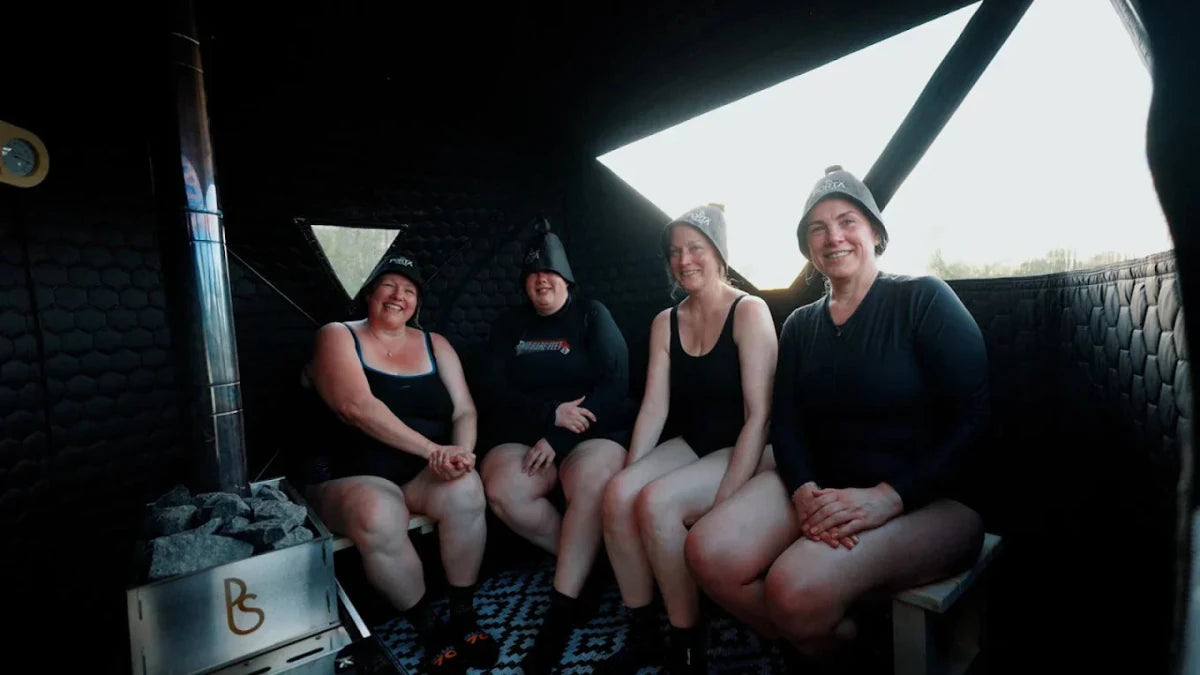
This is the best layout for conversation. Everyone can face each other, which makes it ideal for social groups, wellness clubs, garden sauna sessions, and group wellness spaces where the experience is as communal as it is personal.
The catch is the width. Opposite benches need enough space between them for knees, movement, and heater clearance if the stove sits near the centre. If the room is too narrow, people end up twisting sideways or sitting with their legs pulled in.
Portable / Modular Bench Layout

Best for portable sauna tents, compact UK gardens, and anyone who wants flexibility without a fixed build. Instead of attaching benches to walls, this layout uses freestanding seating that can be moved, folded, or repositioned around the stove. It’s especially useful in a small setup, where clear floor space matters as much as seating capacity.
A straight bench works well for simple sessions, while a dual-level bench gives bathers a hotter upper seat and a gentler lower option.
Sauna Bench Dimensions and Heights: What the Numbers Actually Mean
Lower benches typically sit around 30–45cm high, while upper benches run higher, often in the 60–105cm range, depending on ceiling height and how much heat intensity the room is designed for.
Bench depth matters too: a sitting-only bench can get away with 45–50cm, but if you want to lie down or stretch your legs out, you'll want at least 60cm of depth.
Per person, budget roughly 60cm of sitting width; tighter than that, and elbows start colliding. And don't ignore the ceiling clearance above the top bench. Somewhere around 110–130cm between the highest bench and the ceiling lets steam and heat distribute properly instead of pooling uselessly near the roof.
Portable tent seating is different. You’re not building into walls, so stability, footprint, and stove clearance matter more than fixed construction rules.
Types of Sauna Seating Structures
Not all benches are built the same way, and the structure changes both the look and the practicality.
- Open seating is the traditional approach, with a support frame visible and open space underneath. Nothing fancy, but it's genuinely the easiest type to clean since there's nowhere for moisture to hide.
- Enclosed or panelled seating covers that support the structure with removable panels, giving a tidier, more modern finish. You lose a bit of ventilation underneath in exchange for a cleaner look.
- Platform benches raise the floor itself, often with the heater built directly into the structure. Families often prefer these because lower levels feel easier and more accessible for children.
- Floating (console) benches hide their support entirely, mounted straight into the wall. Sleek, minimal, and genuinely satisfying to sweep underneath, though the wall needs to be solid enough to actually hold the weight.
- Ergonomic or contoured benches curve with the body rather than against it, letting you settle into a half-reclining position instead of sitting bolt upright the whole session.
- Chairs or spa-style seating show up more in steam rooms than traditional saunas, mainly because sitting lower in a chair often puts you outside the hottest layer of air, not ideal if you're chasing serious heat.
- Freestanding or modular furniture can be rearranged on demand, which is honestly underrated. It's also the closest cousin to what works well in a portable sauna setup, where flexibility beats permanence every time.
Portable & Tent Sauna Seating Ideas

Space is the reason a strong bench works so well in compact gardens and outdoor setups. The Folding Cedar Sauna Bench fits portable sauna use because it folds flat, stores easily, and gives proper timber seating without tying you to a fixed build.
That’s why a single sturdy bench works so well in compact gardens and outdoor setups. The Folding Cedar Sauna Bench is a natural fit for portable sauna users because it folds flat, stores easily, and gives you proper timber seating without committing to a permanent build.
For more height variation, the Dual Level Sauna Bench gives users two seating levels: higher for stronger heat, lower for a gentler session. That’s a useful upgrade for shared sessions where not everyone wants the same intensity.
You can also add heat-safe cushions or washable bench covers for longer wood-fired sessions, as long as the materials are suitable for sauna temperatures. Some users prefer a removable bench so the tent can be cleared between sessions for stretching, cooling, or yoga-style recovery.
With fabric flooring or groundsheets, footing matters. The bench should sit level, not wobble, and leave clear space around the wood-fired stove. In 4–6 person tent sauna designs, bench placement can make the difference between “cosy and practical” and “everyone’s knees are too close to the stove.”
For setup upgrades, you need complete accessories for sauna. For post-session lounging, the Deck Chairs make more sense outside the heat zone than inside the sauna itself.
Also Read: Are Portable Saunas Worth It?
Best Wood Types for Sauna Benches
Wood choice isn't just aesthetic; it's a genuine comfort and safety decision.
Porous, low-density woods are preferred because they don't retain heat the way denser timber does, which makes them far more comfortable to sit or lean against.
- Aspen and alder are the classic Nordic choices, light, low-resin, and reliably comfortable.
- Spruce handles moisture exceptionally well, which is why it's so common in outdoor sauna builds.
- Pine works too, but only once it's been heat-treated; the resin can leak out under heat (not something you want against bare skin).
- Cedar is valued for its aroma, moisture resistance, and naturally durable character.
- Basswood rounds things out as a lighter, knot-resistant option favoured for clean, commercial-grade finishes.
Knot-free, clear-grain wood isn't just about looks, either. Knots concentrate heat unevenly, and a hot knot pressed against skin is a genuine minor burn risk, not dramatic, but unpleasant enough to avoid.
Thermally treated wood gets heated to roughly 200°C+ for an extended period, which improves moisture resistance, reduces warping, and gives the timber a noticeably darker, richer tone. It's a deliberate manufacturing step, not a finish you'd apply yourself.
And if sustainability matters to you (it should), look for PEFC-certified timber. It's a straightforward way to confirm the wood came from a responsibly managed forest rather than question marks.
Sauna Seating Etiquette
A few unwritten rules keep a shared sauna pleasant rather than awkward. Most trace back to Finnish löyly tradition, where the sauna has always been as much a social space as a practical one.
- Always sit on a towel. Hygiene matters in a shared, sweaty space, and most sauna-goers consider it non-negotiable.
- Respect personal space. Even on a communal bench, leave a gap if the room allows it.
- Start low if you're new. The lower bench runs noticeably cooler than the top tier, a sensible place to acclimatise before climbing higher.
- Keep sessions to roughly 10–15 minutes, followed by a proper cooling break before going back in.
Remember the social role of the bench. Across plenty of cultures, the sauna bench has functioned as a quiet meeting point, somewhere conversations happen, or somewhere silence is just as welcome.
How to Choose the Right Sauna Seating for Your Space
A few honest questions will narrow this down faster than scrolling through inspiration photos.
- How much space do I actually have? Measure your sauna's floor area first, it rules out half the layout options before you fall in love with one that won't fit.
- How many people need to sit at once? A solo or couple's sauna has completely different bench needs than a family or group setup.
- Is my sauna fixed or portable? A timber cabin allows permanent wall-mounted benches; a tent sauna needs seating that's stable on its own, not structurally attached to anything.
- Will it be used indoors or outdoors? Outdoor and garden saunas need seating built to handle moisture and temperature swings, not just heat.
- What's my budget? Custom-built cabin benches cost considerably more than a ready-made or modular bench solution.
For garden or outdoor saunas specifically, the priority shifts. It's less about which layout looks best on Pinterest and more about which bench can handle being moved, folded, stored, and rained on occasionally.
FAQs
What is the best wood for sauna benches?
Aspen, alder, and cedar are generally considered the best options, thanks to low resin content, comfortable surface temperature, and good moisture resistance. Cedar additionally brings antibacterial properties and a noticeable natural aroma, which is part of why it's a popular choice for portable sauna benches specifically.
How many people can sit on a standard sauna bench?
It depends entirely on bench length and layout. As a rough guide, budget around 60cm of width per person. A 120cm straight bench comfortably seats two, while L-shaped or U-shaped layouts can scale up to six or more, depending on overall room size.
How do I clean and maintain sauna benches?
Wipe benches down after each use and let them dry fully before closing up the sauna. Periodically treat wood with a sauna-safe oil or wax (avoid varnish, it tends to crack under sauna heat). For portable benches, occasional deep cleaning with a mild, non-abrasive cleaner keeps the wood looking fresh without stripping its natural protective oils.
Final Thoughts
The best sauna seating depends on space, sauna type, and how your household actually uses the sauna. A narrow cabin may only need a straight bench. A family sauna might benefit from dual levels. A social sauna needs room for conversation, not just maximum capacity on paper.
- For small saunas and solo or couple use, I-Shape is the simplest choice.
- Choose L-Shape for compact homes or garden saunas where you want flexible seating.
- U-Shape suits larger family saunas and group sessions.
- Facing / II-Shape benches work best for social sauna sessions with extra width.
- Portable / Modular layouts are ideal for tent saunas, compact UK gardens, and flexible outdoor setups.
Portable saunas make the decision easier for people who want the sauna ritual without a permanent timber build. Start with stable, comfortable seating, then add upgrades as your routine grows.


Leave a comment
All comments are moderated before being published.
This site is protected by hCaptcha and the hCaptcha Privacy Policy and Terms of Service apply.