

Heat therapy has quietly become part of everyday life across the UK. You no longer need a spa membership or a dedicated sauna room to enjoy it. A sauna blanket has opened the door for people who want a simple, affordable way to experience infrared heat at home.
That growing popularity has also brought plenty of exaggerated claims. Some promise dramatic weight loss. Others suggest post-training recovery, detoxification, or medical-grade health improvements. But do sauna blankets actually provide meaningful health benefits? A sauna blanket works on the same principle as a sauna. But the evidence is not equally strong across every type of sauna, and blanket-specific research remains limited.
Here’s what the evidence actually tells us about the benefits and limitations.
What a Sauna Blanket Actually Is
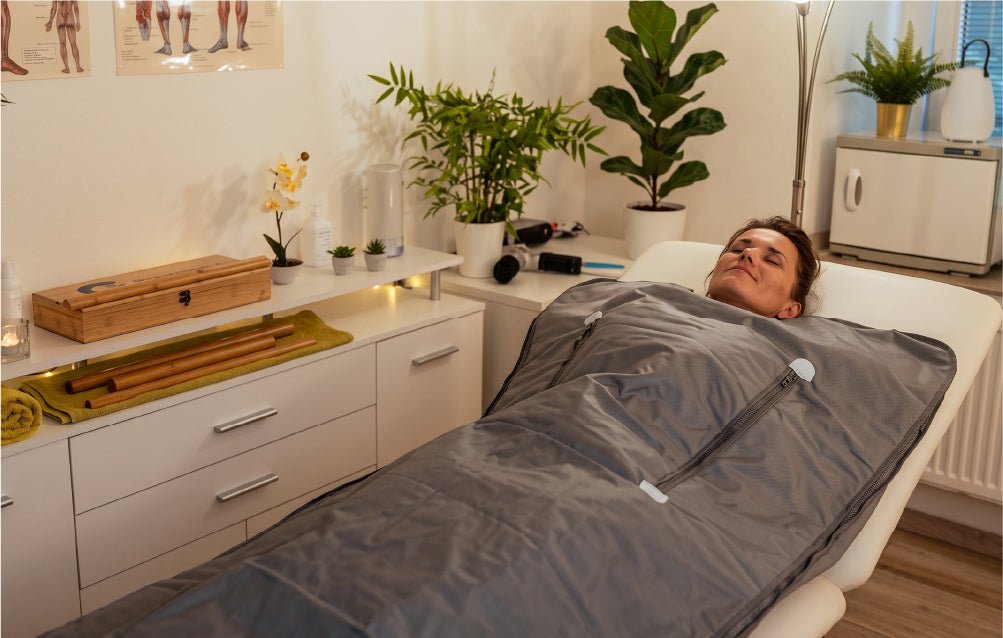
A sauna blanket is a padded, sleeping-bag-style device lined with far infrared heating elements that warm your body directly rather than heating the air around you. Most models run between 25°C and 80°C, set by you through a handheld controller with a built-in timer. The main draws are relaxation, support for muscle recovery, and convenience.
You lie inside it with your head outside and, on most designs, your arms out as well. The sides zip or fold over so you can adjust the fit once you are settled, and a session typically runs 20 to 45 minutes from cold.
Prices in the UK currently sit somewhere between £150 at the budget end and around £600 for better-insulated units with more reliable temperature control. That gap buys you something real. Cheaper blankets heat less evenly and lose warmth at the seams and zip line, which matters more during a 40-minute session than it sounds like it should on a product page.
It is one of several types of sauna worth understanding before you settle on any single format, and the one with the lowest barrier to entry by a clear margin.
The Main Sauna Blanket Benefits
Some benefits are easy to notice after your first few sessions. Others are more gradual and depend on consistent use. The benefits below reflect what current evidence and real-world experience suggest.
1. Deep Relaxation and Lower Stress
Heat exposure shifts your body towards parasympathetic dominance, the "rest and digest" state that counteracts the fight-or-flight tension most of us carry around without noticing. Your heart rate settles, breathing slows, and muscles that have been braced all day start to let go.
A study from the National Library of Medicine has reported reduced cortisol after repeated sauna sessions, though most of that evidence comes from traditional bathing-style saunas rather than blanket-specific trials. The relaxation effect itself is well documented and consistent across formats, but whether a blanket produces the identical hormonal shift as a full cabin session is reported rather than proven.
2. Muscle Recovery and Easing Aches
Heat widens your blood vessels, and wider vessels mean more blood reaching tired, tight muscle tissue. That extra circulation carries oxygen in and waste products like lactate out, which is the basic mechanism behind why heat feels good on sore legs after a hard session at the gym.
Evidence for infrared therapy is stronger than the evidence for sauna blankets specifically, because most studies have examined infrared cabins or other heat therapy systems rather than blanket devices. Most people report feeling looser afterwards, which lines up with what the mechanism would predict, and it's a big part of why heat is often included in post-training recovery routines.
3. Better Sleep
Your core temperature needs to fall before you can fall asleep easily, which is the same reason a cool bedroom helps, and a stuffy one doesn't. A sauna blanket session raises your core temperature, and the rebound drop afterwards mimics that natural pre-sleep cooling curve rather neatly.
The practical note matters more than the theory: finish your session 60 to 90 minutes before bed. Go straight from blanket to pillow, and you're still too warm to drop off easily. Give your body that window, and the cooling effect works in your favour instead of against you, which is the same principle behind most of the advice on sauna and sleep.
4. Circulation and Cardiovascular Support
A sauna blanket exposes the body to infrared heat, which can promote vasodilation and increase blood flow during a session. A study published in the International Heart Journal on portable infrared thermal blankets has found that heat therapy can influence cardiovascular function, although the study involved patients with decompensated heart failure rather than healthy sauna-blanket users.
A review published in Mayo Clinic Proceedings also found that sauna-based heat exposure may support cardiovascular function through mechanisms such as improved blood-vessel dilation, reduced arterial stiffness, and lower blood pressure. However, these findings are based mainly on traditional Finnish sauna bathing, so they should not be treated as direct evidence of long-term cardiovascular benefits from sauna blankets.
For sauna blankets, the evidence therefore suggests a plausible cardiovascular response to heat, but more blanket-specific research is needed to establish lasting cardiovascular benefits.
5. Skin and Sweat
Increased blood flow during a session sends more circulation to the skin's surface, and sweating clears away surface debris sitting in your pores. Many people notice a flushed, slightly brighter look immediately after a session, which is a visible sign that blood flow is doing its job.
What it isn't is a collagen treatment or an anti-ageing intervention, whatever some product listings might imply. There's no credible evidence that a sauna blanket changes collagen production or skin structure. What you're getting is a temporary circulation boost and a genuine, if superficial, clean-out, similar in kind to how sauna heat affects your skin more broadly.
6. Convenience, Space and Cost
This is the strongest benefit, and it doesn't need any exaggeration to make the case. A sauna blanket fits in a wardrobe. It works in a one-bedroom flat with zero outdoor space. There's no installation, no planning, and no waiting for a delivery slot for a base or a frame.
It's also the lowest entry cost of any sauna format by a wide margin. The real advantage isn't the physiological ceiling; it's consistency. A blanket you actually reach for twice a week beats a sauna you admire from a distance and use twice a year.
For someone who wants regular heat sessions but has limited space or budget, that convenience may matter more than recreating the full experience of a traditional sauna.
7. What About Weight Loss and Detox
This is where expectations need resetting. You'll almost certainly weigh less immediately after a sauna blanket session. Most of that change is water.
As soon as you rehydrate, your weight returns to normal. That doesn't mean fat has been lost. Genuine fat loss happens through a sustained calorie deficit, not through sweating.
Some manufacturers advertise impressive calorie-burning figures during infrared sessions. The problem is that those numbers aren't supported by controlled studies on sauna blankets. Heat does increase energy expenditure slightly because your body works to regulate temperature, but not at the level many advertisements suggest.
The same applies to detox claims.
Sweat contains tiny amounts of minerals and trace compounds, yet your liver and kidneys remain your body's primary detoxification system. They continuously filter waste products regardless of how much you sweat.
None of this means sauna blankets are pointless. Their significance lies in relaxation, comfort, and making regular heat therapy accessible. Treating them as a shortcut to rapid weight loss or detoxification only creates unrealistic expectations that no product can consistently meet.
What the Evidence Actually Supports
Most articles stop at listing benefits. Very few explain where those claims actually come from. That's worth changing because the quality of evidence varies considerably.
A widely cited 2018 review in Mayo Clinic Proceedings examined the cardiovascular and other health effects of sauna bathing, drawing on a large body of observational and interventional evidence. It's a solid piece of research, and it's reasonably convincing on cardiovascular outcomes and relaxation.
Infrared therapy has its own encouraging research. European Journal of Investigation in Health, Psychology and Education highlights that infrared heat may help decrease pain levels and promote relaxation, particularly when used consistently. Infrared sauna therapy is recognised as a generally safe option for many healthy adults. Sauna blanket studies, however, remain surprisingly limited. That doesn't mean the blanket doesn't work.
Your body still responds to heat through increased circulation, sweating, and changes in heart rate. The mechanisms are biologically plausible, and many users report positive experiences.
How to Use a Sauna Blanket Safely
Using a sauna blanket safely is simple if you follow a few sensible habits.
- Aim for two to four sessions each week. If you're new to heat therapy, begin with 20 to 30 minutes so your body can adjust gradually. Don't exceed 45 to 50 minutes. Longer sessions rarely provide extra benefits and may increase the risk of dehydration or overheating.
- Stay well hydrated. Drink water before your session and replace lost fluids afterwards. Avoid using a sauna blanket if you're already dehydrated, especially after intense exercise or alcohol.
- Use a cotton towel or liner. Placing one inside the blanket improves comfort, absorbs sweat, and helps keep the interior clean.
- Clean the blanket after every use. Wipe the inside with a soft, damp cloth and let it dry completely before folding or storing it. Air out a new blanket before first use. Any manufacturing odour usually fades after one or two days in a well-ventilated space.
- Choose a sauna blanket with recognised electrical safety certification, reliable sauna temperature controls and automatic shut-off features instead of focusing solely on advertised EMF figures.
- Follow the manufacturer's instructions. Temperature settings, timers and maintenance requirements vary between models, so always use your blanket as directed.
- Check with your GP if needed. Speak to a healthcare professional before using a sauna blanket if you're pregnant, have cardiovascular disease, low blood pressure, take medication that affects heat tolerance, or are recovering from surgery.
Where a Sauna Blanket Falls Short
A sauna blanket delivers heat differently from a traditional sauna. It warms your body directly while your head stays outside, so you don't experience the hot air, steam, or löyly that many sauna users enjoy.
Sessions are done lying down, making them ideal for relaxation but less social than a sauna cabin or tent. Your face and airways remain cool, and contrast therapy with a cold plunge feels less seamless.
Regular cleaning is essential to prevent odours, and build quality varies widely between brands. These aren't deal-breakers. They simply show that a sauna blanket complements, rather than replaces, a traditional sauna experience.
Blanket or Portable Sauna: Choosing What Fits Your Life
A blanket suits you if you live in a flat with no outdoor space, want the lowest possible entry cost, and mainly want passive recovery and better sleep rather than a full sensory ritual. It suits solo use well, and if storage matters more to you than the experience itself, this is your format.
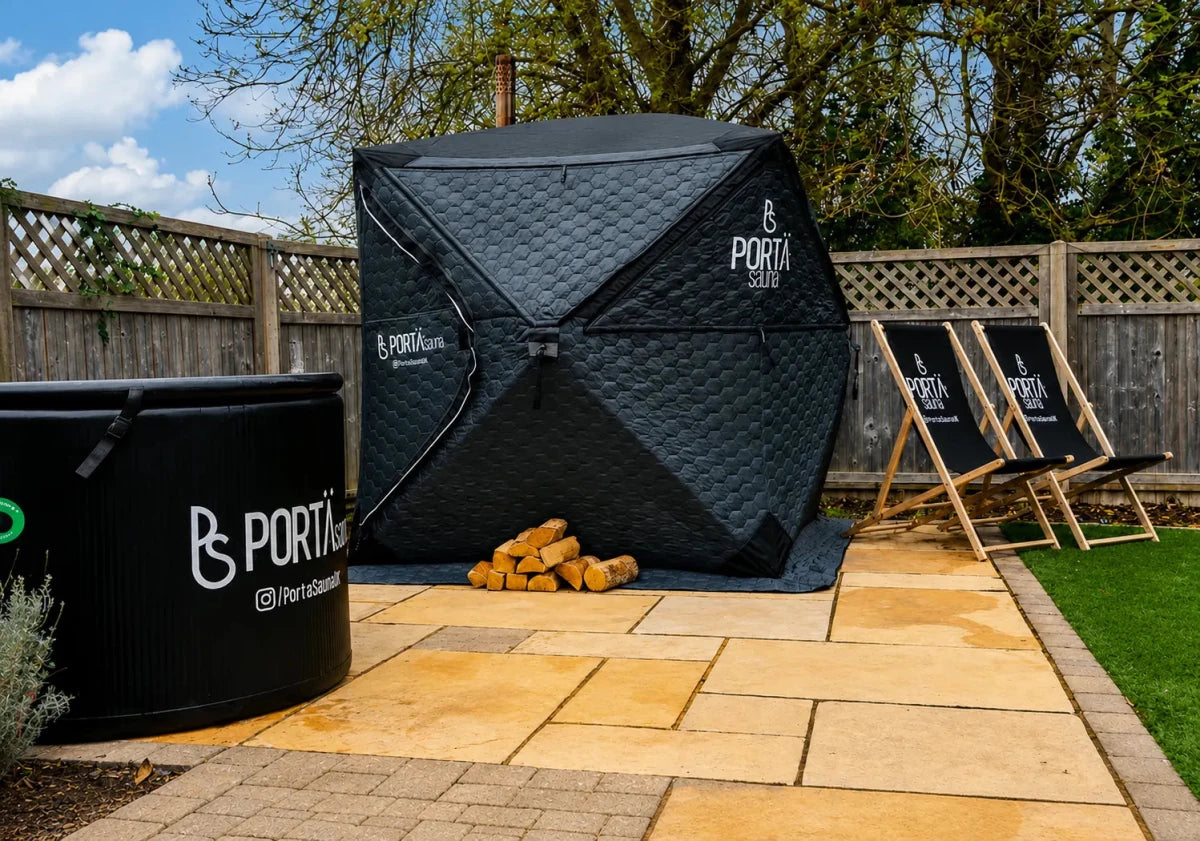
A portable sauna tent suits you if you've got a garden, patio or outdoor space to put it in. It suits you if you want proper high heat with steam, if you want to share sessions with a partner or friends, and if you want to pair heat with cold water rather than working around the difficulty of doing that with a blanket.
It's the format for anyone who wants the ritual, not just the physiological effect underneath it, whether that ends up being an outdoor or indoor sauna setup.
A portable sauna tent doesn't need planning permission, sets up in around ten minutes, runs on low wood costs, and works through winter as readily as summer. It's worth checking what a portable sauna costs before assuming it's out of reach. If that side of things appeals more than a solo wrap-up session, PortaSauna's HEX tent is worth a look.
The Bottom Line
A sauna blanket delivers real heat exposure, genuine relaxation, and the lowest entry cost of any sauna format, provided your expectations on detox and weight loss stay realistic. It isn't a replacement for a proper sauna. It's a different tool built for a different set of circumstances, mainly solo recovery in a space where a full sauna simply won't fit.
If you're still weighing up which format suits your life, compare it with a portable sauna before deciding which option better matches your space, budget, and preferred experience.


Leave a comment
All comments are moderated before being published.
This site is protected by hCaptcha and the hCaptcha Privacy Policy and Terms of Service apply.