


A sauna hat looks a little strange the first time you see one. Then you wear it once, sit on the upper bench, and suddenly the whole thing makes sense. The biggest sauna hat benefits are surprisingly practical. Better head comfort, less harsh heat on the scalp and ears, and a sauna session that feels calmer.
Seasoned sauna-goers have known this for ages. The hat insulates your head, shields your ears and hair from dry heat, and helps the whole session feel less frantic.
Here’s what a sauna hat actually does, why it works, and how to wear one without turning it into another overhyped sauna accessory at home.
What Is a Sauna Hat?

A sauna hat is insulating headwear, usually wool felt or Merino wool, designed to shield your head, scalp, ears, and hair from the most intense heat in the room. Unlike a regular hat, it's built specifically to handle dry, high-temperature air without breaking down or trapping moisture against your skin.
The concept isn't new. Banya hats have been part of Russian and Nordic-Baltic sauna culture for generations, originally made from thick wool to protect bathers during long, hot sessions. It wasn't a fashion choice; it was practical gear born out of necessity in cultures that took sauna bathing seriously, often daily.
These days, the same logic applies whether you're in a century-old wooden banya or a modern portable sauna for home across the UK. The heat dynamics haven't changed, even if the setting has.
Why Does Your Head Need Protection in a Sauna?

Heat rises. That's just physics, and it means the air around your head, especially if you're sitting on an upper bench, is consistently the hottest air in the room, often by a significant margin compared to floor level.
Your scalp and head are also more heat-sensitive than people assume. This is the area that tends to trigger the "okay, I need to get out now" signal well before the rest of your body has actually finished benefiting from the heat. It's not that your body can't handle more time in the sauna; it's that your head taps out first.
A sauna hat slows that heat transfer down, which lets your body warm more evenly instead of your head overheating while your legs are still catching up. Worth being honest here: tradition and decades of user experience strongly back this up, but rigorous clinical data specifically on sauna hats is limited. This isn't medical equipment; it's a comfort tool with a long practical track record, and that distinction matters.
The Key Benefits of Wearing a Sauna Hat
Most sauna hat benefits come down to one simple idea: the head usually meets the hottest air first. Whether you're sitting on a built-in bench or a portable sauna bench, the upper seating level is where temperatures are highest. That's why felt or wool banya hats have traditionally been used to shield the head from intense heat and improve overall comfort.
1. Keeps Your Head Cooler and More Comfortable
This is the headline benefit, and it's the reason everything else on this list exists. By insulating against the hottest air in the room, a sauna hat keeps your head from overheating independently of the rest of your body, which makes the entire session feel more even and manageable.
2. Let's You Enjoy Longer Sessions
Once your head stops overheating prematurely, you naturally last longer. Regular wearers commonly report being able to stay in for an extra 5 to 15 minutes compared to going bare-headed. That's not a dramatic transformation, but it adds up; more time in the heat generally means more relaxation and better recovery benefit per session.
3. Protects Your Hair from Heat Damage
Dry sauna heat is rough on hair. It strips moisture fast, which is particularly noticeable if you've got long hair, fine hair, or colour-treated hair that's already more vulnerable to damage. A sauna hat acts as a barrier, keeping that direct heat exposure away from your strands.
If hair health is a real concern for you, this alone might be reason enough to start wearing one; pairing a hat with the right approach to attire for sauna sessions more broadly, since what you wear affects comfort just as much as what you wear on your head.
4. Shields Your Ears and Scalp
Ears and scalp are thin-skinned, low-fat areas, and they're exactly the kind of tissue that registers that sharp, almost stinging heat sensation first. A hat takes the edge off that discomfort, which sounds minor until you've actually felt the difference mid-session.
5. Absorbs Sweat and Keeps It Out of Your Eyes
Not every sauna benefit has to sound profound. Sometimes it’s just sweat management.
A good wool sauna hat absorbs moisture and helps stop sweat from running straight into your eyes. That’s a small thing until it happens every two minutes. Then it becomes extremely annoying.
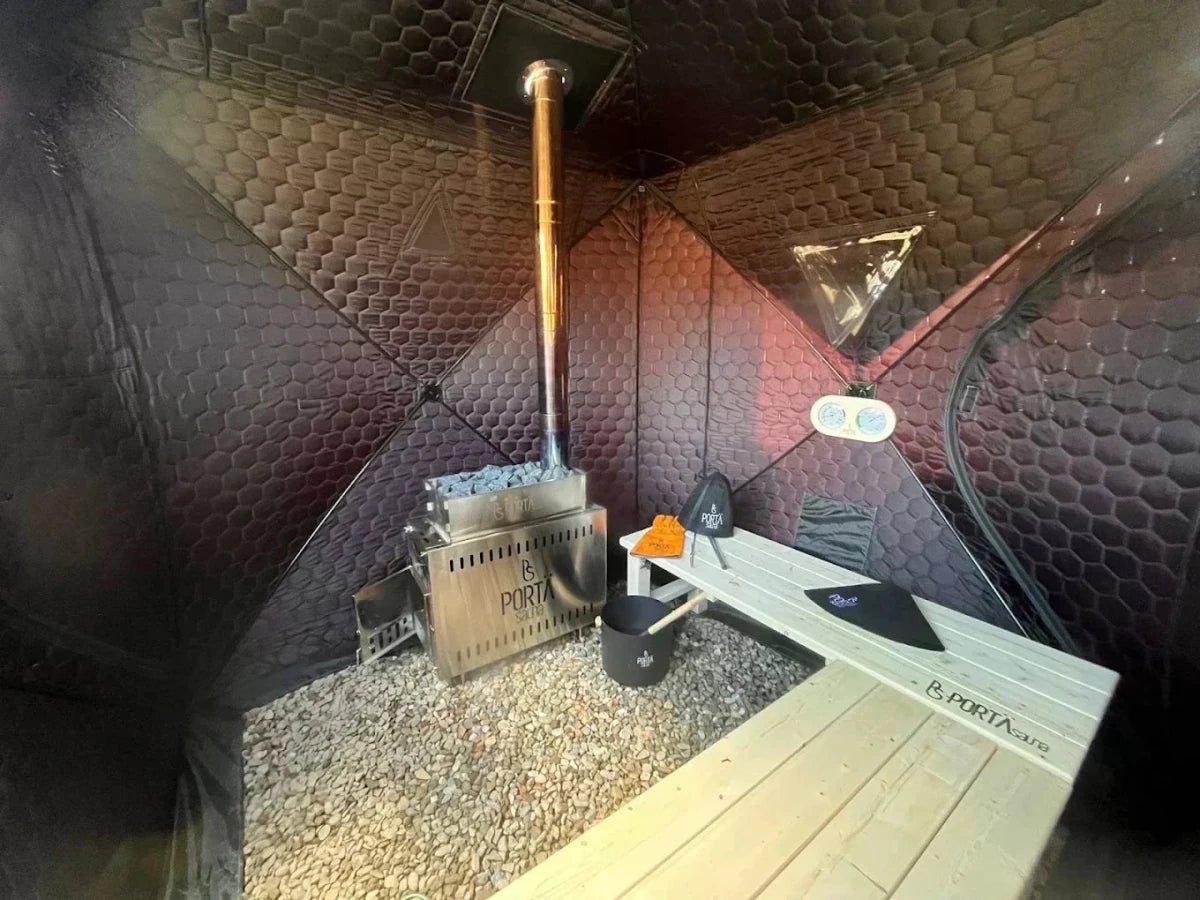
This is also why a sauna hat belongs in the same category as towels, backrests, ladles, thermometers, and other portable sauna accessories. It doesn’t transform the sauna. It removes friction from the experience.
And those tiny comfort improvements add up.
6. Reduces Dizziness and That "Overwhelmed" Feeling
Plenty of sauna-goers describe feeling lightheaded or overwhelmed toward the end of a hot session, and head overheating is often part of that picture. A sauna hat won't prevent every instance of this, and it's not a substitute for proper hydration or knowing your own limits, but keeping your head cooler tends to make sessions feel less intense overall.
7. Doubles Up for Cold Plunge & Contrast Therapy
Here's a benefit a lot of people skip. Keep the hat on during the cool-down phase too. If you're cycling between sauna heat and a cold plunge as part of a contrast therapy routine, the hat softens that transition by preventing your head from going from one extreme straight to the other. It's a small thing, but it makes the whole protocol feel less jarring.
Wool vs Linen vs Synthetic: What's the Best Sauna Hat Material?
Material choice changes how a hat performs more than almost anything else about it. Here's how the main options stack up:
| Material | Insulation | Breathability | Best For |
| Wool Felt | Very high |
Low to moderate |
Traditional banya-style heat sessions |
| Merino Wool | High | High, naturally antibacterial | Frequent sauna-goers, sensitive skin |
| Linen | Low to moderate |
Very high |
Shorter, lower-heat sessions |
| Synthetic Blends | Moderate | Moderate | Budget buyers, occasional use |
Merino wool tends to be the sweet spot, and it's not close. It insulates as well as traditional felt but breathes better, resists odour naturally without chemical treatment, and moulds to your head shape over repeated use instead of staying stiff. Synthetic options are cheaper, sure, but they generally don't insulate as well and tend to hold onto smell in a way wool simply doesn't.
How to Use a Sauna Hat (Wet vs Dry)
There are two approaches, and they serve different purposes.
Dry gives you maximum insulation. Put the hat on dry before you enter, and it'll do its job of slowing heat transfer for the entire session.
Wet works differently: soaking the hat first provides a passive cooling effect as the moisture evaporates, though that effect fades as the hat warms. Some people re-wet midway through a longer session to refresh the cooling.
Either way, the basic routine is simple: put the hat on before you enter the heat, not after you're already feeling it. If you're sitting on an upper bench where the heat is most concentrated, that's exactly when a hat earns its keep. And this isn't limited to traditional saunas; the same logic applies just as well to an indoor or outdoor sauna setup, where the enclosed space can get just as intense, just as fast.
How to Care for Your Sauna Hat
Wool hats need a bit of attention to last. Air them out after every session rather than balling them up damp in a bag. Hand-wash occasionally in cool water with a wool-safe detergent; skip the washing machine entirely, since agitation and heat will felt and shrink the wool further than intended. Reshape it gently while damp and let it air-dry away from direct heat sources. Once the felt starts to thin or lose its structure, it's time to replace it.
Do You Really Need a Sauna Hat?

Honestly? No, not strictly. You can sauna perfectly well without one, and plenty of people do. But it's a low-cost upgrade that makes sessions noticeably more comfortable and protects your hair in the process, and the value scales with how often you use a sauna. If you tend to sit on the upper bench, sauna frequently, or have hair that's already colour-treated or prone to dryness, a hat moves from "nice to have" to genuinely worth it. If you sauna once a month on the lower bench, it's a smaller deal, though still a pleasant one.
If you’re building a home heat routine around a portable sauna UK setup, the Merino Wool Sauna Hat is built specifically for this kind of regular use, breathable, naturally odour-resistant, and shaped to actually fit.
Conclusion
The best sauna accessories don’t make the experience complicated. They make it easier to enjoy.
A sauna hat helps manage head heat, protects the scalp and hair, shields sensitive ears, absorbs sweat, and makes hot sessions feel smoother from start to finish. It won’t replace common sense or sauna safety, but it can make the difference between cutting a session short and settling into the heat properly.
It looks odd for about five seconds. Then it just works.


Leave a comment
All comments are moderated before being published.
This site is protected by hCaptcha and the hCaptcha Privacy Policy and Terms of Service apply.